Case study · Aug – Sep 2026 · Backend Developer (project-based client work)
SIPANDAI Rembes
Attendance and performance recaps for village officials: a REST API with an accuracy-aware geofence and sealed monthly reports.
- Client
- Pemerintah Desa Rembes
- Role
- Backend developer: Laravel API, PostgreSQL schema, authentication and roles, business and scoring rules, photo validation, scheduled jobs, PDF/Excel reports, CI/CD, server and backups. Also contributed Next.js/TypeScript API hooks, camera/geolocation and PWA fixes
- Team
- Two people: I built the backend and handled deployment, and contributed frontend features alongside my teammate
- Stack
- Laravel 12 (PHP 8.3), PostgreSQL 16, Sanctum, Pest, OpenAPI (Scramble), Docker, Nginx, Ubuntu VPS, GitHub Actions
- Frontend
- Next.js/TypeScript PWA, TanStack Query, static export
- Status
- Delivered, September 2026
Context
A village office of 13 officials needed attendance with photo and location checks, plus monthly performance recaps the village head signs. It had to ship as a link rather than an APK, and work on both phones and laptops.
What I built
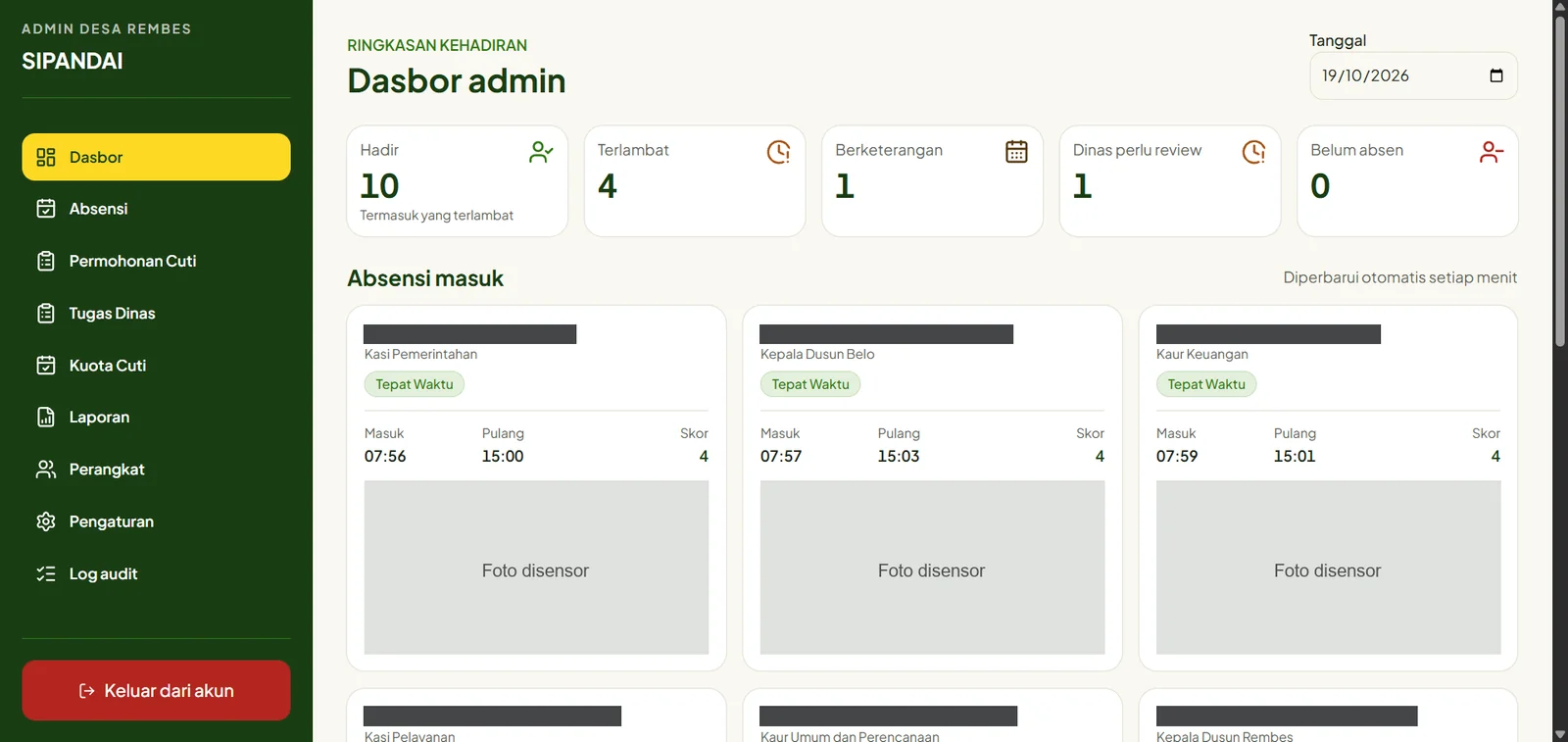
- A REST API under /api/v1 with Sanctum tokens and policies for three roles: admin, employee, and a read-only village leader.
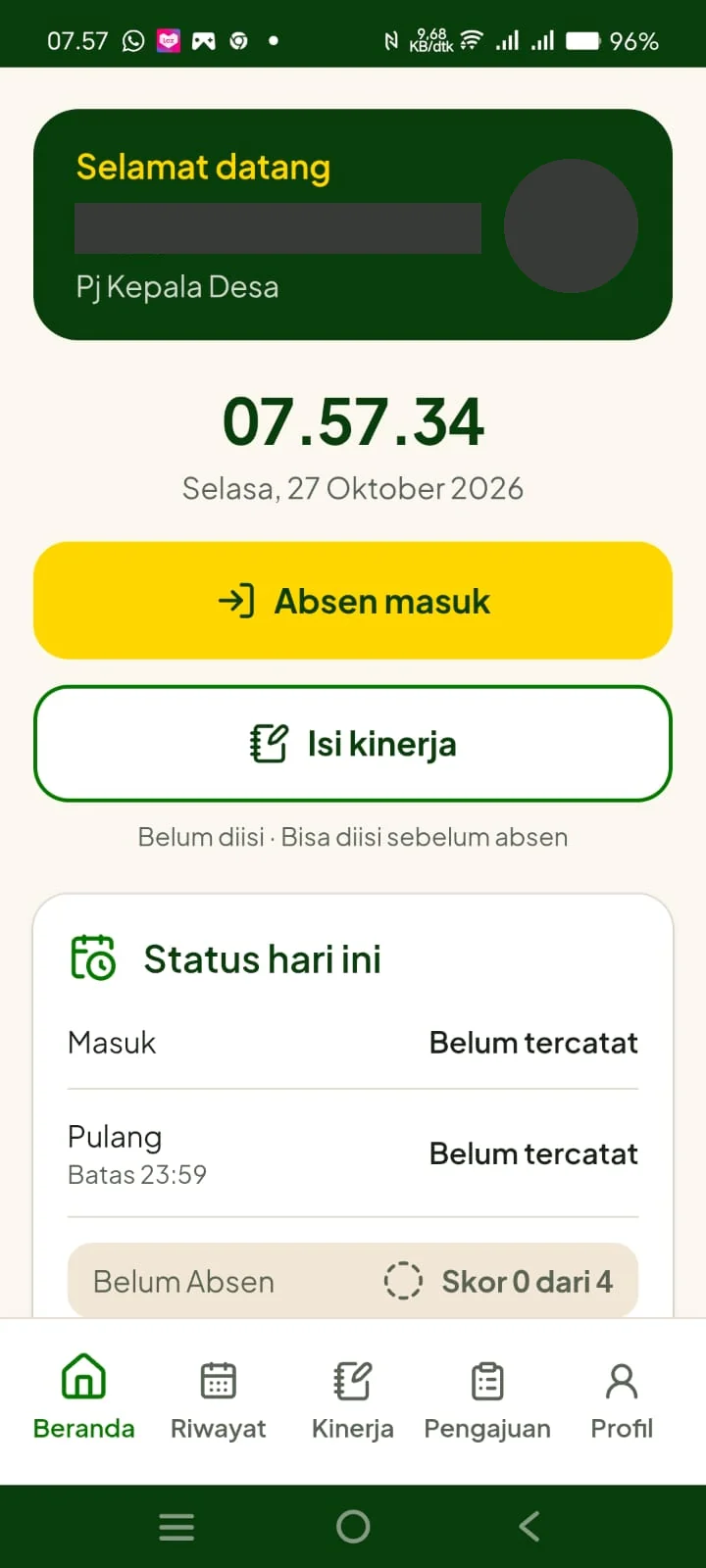
- Check-in and check-out with photo and geofence validation on the server, with a unique (user, date) constraint to prevent duplicate check-ins.
- Leave requests with approval, and daily work reports used to generate monthly recaps.
- Contributed Next.js/TypeScript API hooks with TanStack Query. Updated camera and geolocation handling for permissions, timeouts, and coordinates captured when a photo is taken.
- Fixed session and PWA cache issues, and added fallback UI for unrecognized API statuses.
- Monthly PDF and Excel recaps, sealed once signed, with an audit log of corrections.
- A scheduled daily close and monthly seal.
- OpenAPI documentation generated from the code, and Pest tests on the scoring and geofence rules.
- Containerized the Laravel API with Docker and deployed it on an Ubuntu VPS behind Nginx, with automated deployment through GitHub Actions, a database-backed queue, and scheduled jobs.
Architecture
Decisions
- 01
A unique (user, date) constraint in PostgreSQL
Two check-in requests arriving at the same moment both pass an application-level check, and only the database constraint is atomic. The API turns the violation into a friendly “already checked in” message.
- 02
The server clock decides the score
Otherwise moving a phone's clock back earns a perfect score.
- 03
An accuracy-aware geofence
Laptops have no GPS and can report positions anywhere from tens of meters to kilometers off. The check combines distance with the device's reported accuracy, from most to least certain (clearly inside, then office network, then borderline and flagged for review), so laptops can check in without opening a loophole.
- 04
Sealed monthly recaps with an audit log
A signed report must not change silently when an old record is corrected, so reopening a sealed month is an explicit, logged action.
- 05
Built for a small Ubuntu VPS
Everything runs on one Ubuntu VPS with 2 vCPUs and 4 GB of RAM, so the system uses a database queue instead of Redis, DomPDF instead of headless Chromium, and a static frontend with no Node process on the server.
- 06
Face detection, not recognition
The system confirms that one face is in front of the camera and rejects photos that carry camera EXIF data (gallery uploads). It does not verify identity. That limitation is documented for the client, with identity checks proposed as a later phase.
Outcome
Delivered in September 2026 for the office's 13 officials: monthly PDF/Excel recaps from daily reports, duplicate check-in prevention, and an audit log to trace corrections. Signed monthly reports stay sealed.
Screenshots